 News Chicago
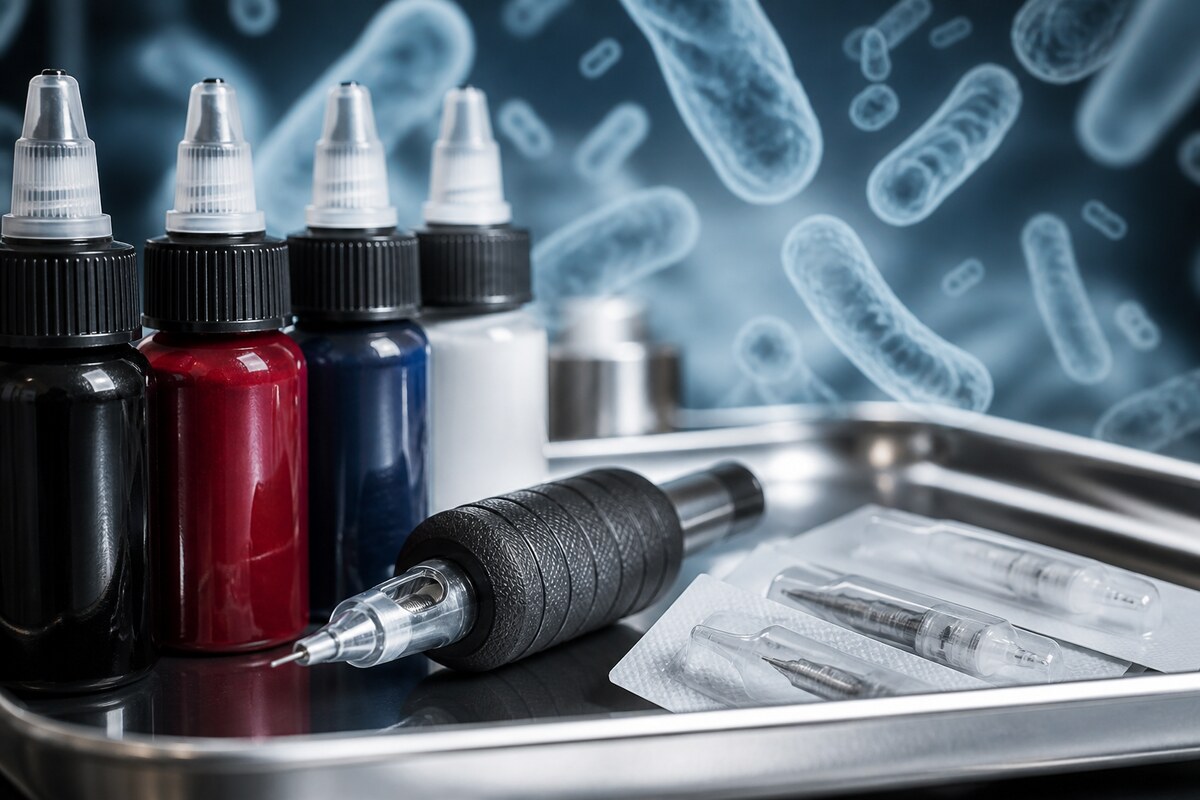
A new FDA-backed analysis is raising a practical health question for anyone getting tattooed or booking permanent makeup: how clean is the ink before it ever reaches the studio?
The concern is not the needle. It is the bottle. Researchers reviewed four FDA tattoo ink investigations conducted from 2018 through 2024 and found bacterial contamination in a large share of unopened tattoo and permanent makeup inks sold in the United States.
Across 259 unopened products, the pooled contamination estimate was 35.4 percent. Even inks labeled sterile were not reliably sterile.
What the FDA Researchers Found
The analysis, published in Scientific Reports, looked back at four earlier FDA surveys of commercially available tattoo and permanent makeup inks. The researchers were not testing swabs from tattoo shops. They were looking at sealed products, opened under laboratory conditions, then tested for bacteria capable of growing in culture.
That distinction matters. A clean tattoo studio can reduce risk at the point of service, but it cannot fully solve contamination that may already be present inside an ink bottle.
The combined dataset included 259 unopened ink products. Researchers reported that 86 samples were positive for bacterial contamination. The pooled estimate across the four surveys was 35.4 percent, with individual survey estimates ranging from 19 percent to 52 percent.
The Sterile Label Was the Weak Point
One of the clearest findings was that a sterility claim did not offer much reassurance. Nearly one-third of products labeled sterile contained microorganisms. Contamination rates were also similar across tattoo inks and permanent makeup inks, and the analysis did not find a simple dividing line based on whether the product was domestic or imported.
In practical terms, the label on the bottle did not give artists or customers an easy way to know whether an ink was truly free of bacteria.
The study identified 94 bacterial species across 38 genera. The most common included Bacillus, followed by Pseudomonas, Staphylococcus, and Lysinibacillus. Some of the organisms identified are associated with human illness, although the study did not prove that any specific contaminated product caused an infection.
Why Tattoo Ink Carries a Different Kind of Risk
Tattoos and permanent makeup are not ordinary cosmetic products. Ink is placed below the skin surface, past the body’s outer barrier. That makes manufacturing quality, packaging integrity, recall awareness, and studio hygiene especially important.
The researchers also warned that their testing may not capture the full picture. Culture-based methods find bacteria that grow under the test conditions used. Slow-growing or hard-to-culture organisms may be missed, and the study noted that the number of bacterial species had not fully leveled off as more samples were analyzed.
That means additional testing could reveal even more microbial diversity in tattoo and permanent makeup inks.
What Customers Should Do
The takeaway is not panic. A contaminated ink does not automatically mean someone will develop an infection, and professional tattoo artists already use strict safety procedures to reduce risk.
But customers should treat ink safety as part of the decision. Ask whether the studio tracks ink recalls. Look for artists who use professional suppliers, inspect packaging, follow sterile handling procedures, and avoid questionable products. Be cautious of at-home tattooing, informal setups, or anyone who treats infection control as an afterthought.
For people with immune system concerns, diabetes, skin conditions, or a history of unusual infections, it is worth talking with a clinician before getting tattooed or receiving permanent makeup.
The Bigger Issue
The FDA researchers point to a manufacturing problem, not just a consumer education problem. Their conclusion calls for better quality control, validated sterilization procedures, improved microbiological surveillance, and more consistent manufacturing standards.
The strongest safety improvements will likely have to happen before ink bottles arrive at tattoo studios.
For Chicago tattoo customers, the immediate lesson is simple: choose the artist and the studio carefully. A good shop should care not only about clean needles and clean workstations, but also about the products being placed under your skin.
Sources: ScienceAlert; Scientific Reports study.