 News Chicago
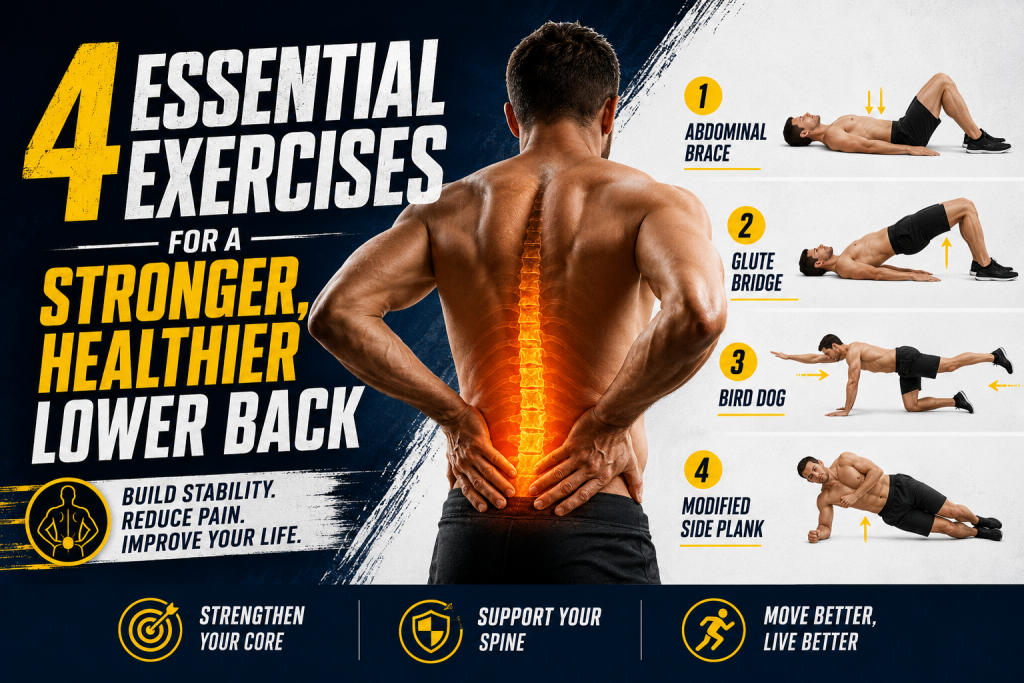
Once your back pain is clearly improving and everyday movements are becoming more comfortable, gentle strengthening exercises can help you rebuild stability and confidence.
The muscles surrounding your abdomen, hips, pelvis and lower back work together to support your spine. Gradually strengthening these areas can improve balance and stability while reducing unnecessary stress on the back.
The following routine includes four controlled exercises: the abdominal brace, glute bridge, bird dog and modified side plank. Perform the routine two to three times per week, leaving at least one rest day between sessions.
Before You Begin
Do not begin strengthening exercises during the most painful stage of an injury unless a healthcare professional has instructed you to do so. Starting too aggressively or too early may increase your symptoms. A physician or physical therapist can help determine when strengthening is appropriate for your specific condition.
Move slowly, breathe normally and focus on proper form rather than completing as many repetitions as possible. Mild muscular effort is expected, but sharp, radiating or steadily increasing pain is not.
Stop the exercise if your pain becomes worse and contact a healthcare professional for guidance.
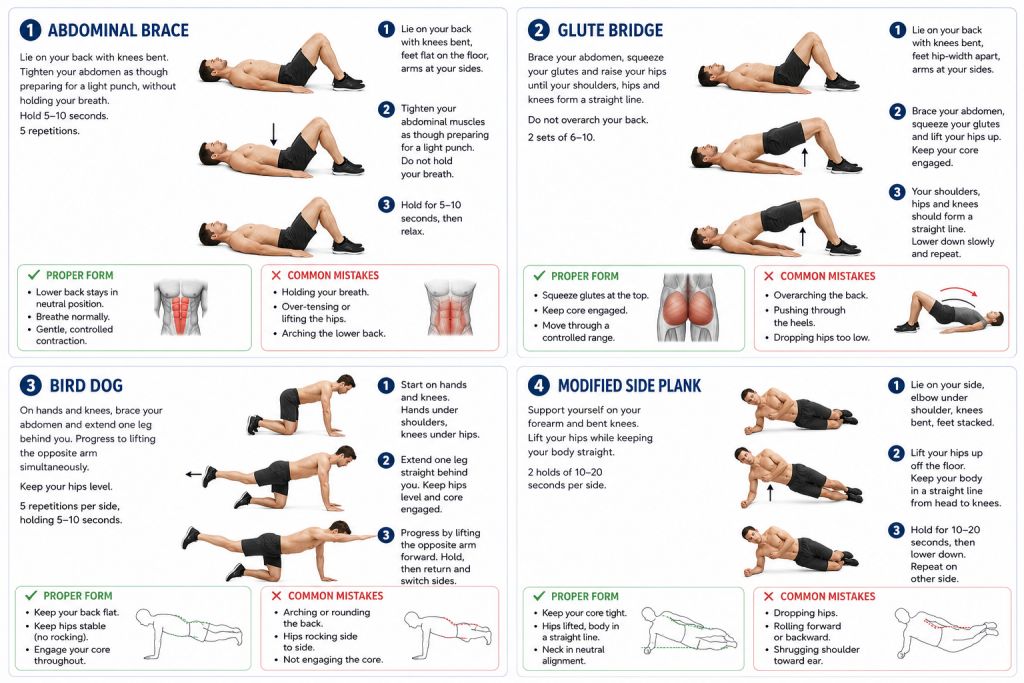
1. Abdominal Brace
The abdominal brace teaches you to engage your core without moving or excessively flattening your lower back.
How to Perform an Abdominal Brace
- Lie on your back with your knees bent and your feet flat on the floor.
- Rest your arms comfortably at your sides.
- Tighten your abdominal muscles as though you are preparing for a light punch.
- Keep your lower back in a comfortable, neutral position.
- Continue breathing normally while holding the contraction for 5 to 10 seconds.
- Slowly relax.
Complete five repetitions.
Proper Form
Keep the contraction controlled and gentle. Your hips, shoulders and lower back should remain still throughout the exercise.
Common Mistakes
Avoid holding your breath, lifting your hips, forcing your back into the floor or tightening your abdomen as hard as possible.
2. Glute Bridge
The glute bridge strengthens the buttocks and helps your hips and core work together to support the lower back.
How to Perform a Glute Bridge
- Lie on your back with your knees bent and your feet approximately hip-width apart.
- Brace your abdomen and squeeze your glutes.
- Press through your feet and slowly raise your hips.
- Stop when your shoulders, hips and knees form a straight line.
- Pause briefly at the top without arching your back.
- Lower your hips slowly and with control.
Complete two sets of 6 to 10 repetitions.
Proper Form
Keep your abdomen engaged and squeeze your glutes at the top. Your movement should come primarily from your hips rather than your lower back.
Common Mistakes
Do not push your hips excessively high, overarch your back or allow your knees to collapse inward. Avoid rushing through the lowering portion of the movement.
3. Bird Dog
The bird dog challenges your core while teaching you to keep your spine and pelvis stable as your arms and legs move.
How to Perform a Bird Dog
- Begin on your hands and knees.
- Position your hands under your shoulders and your knees under your hips.
- Brace your abdomen while keeping your back flat.
- Extend one leg behind you without rotating your hips.
- Hold for 5 to 10 seconds, then return to the starting position.
- Repeat on the opposite side.
- As your control improves, extend the opposite arm and leg at the same time.
Complete five repetitions per side.
Proper Form
Keep your hips level, your neck neutral and your abdominal muscles engaged. Imagine balancing a glass of water across your lower back.
Common Mistakes
Avoid raising your leg higher than your torso, arching your lower back or rocking from side to side. A smaller, controlled movement is more beneficial than a larger movement performed with poor form.
The American Academy of Orthopaedic Surgeons includes the bird dog in its spine-conditioning program as an exercise targeting the back extensors and gluteal muscles.
4. Modified Side Plank
The modified side plank strengthens the muscles along the side of your abdomen while using bent knees to make the traditional side plank more manageable.
How to Perform a Modified Side Plank
- Lie on your side with your knees bent and stacked.
- Position your elbow directly beneath your shoulder.
- Brace your abdomen and gently lift your hips from the floor.
- Keep your head, shoulders, hips and knees aligned.
- Hold the position for 10 to 20 seconds.
- Lower yourself slowly and repeat on the opposite side.
Complete two holds per side.
Proper Form
Keep your core engaged, your hips lifted and your neck in a neutral position. Press your forearm into the floor so your shoulder remains supported.
Common Mistakes
Do not allow your hips to drop or rotate forward. Avoid shrugging your shoulder toward your ear or holding your breath.
How to Progress Safely
The goal is to improve control before increasing difficulty. When you can complete the routine without worsening symptoms and maintain proper form throughout every repetition, progress gradually.
You might add a few seconds to each hold, add one or two repetitions or move to a slightly more challenging variation. Change only one part of the routine at a time so you can monitor how your body responds.
Performing spine-conditioning exercises two to three days per week is consistent with guidance from the American Academy of Orthopaedic Surgeons for maintaining strength and mobility.
When to Stop and Seek Medical Care
Stop exercising and seek professional guidance if you experience increasing pain, pain traveling farther down the leg, new numbness, weakness, difficulty walking or symptoms that do not continue to improve.
Seek immediate medical care for loss of bladder or bowel control, numbness around the buttocks or genital area, sudden significant leg weakness, severe pain following a fall or accident, or back pain accompanied by an unexplained fever.
Consistency Matters More Than Intensity
Back strengthening does not need to be exhausting to be effective. Slow, controlled exercises performed consistently can help retrain the muscles that stabilize your trunk, hips and spine.
Begin with the recommended repetitions, respect your symptoms and give your body adequate recovery time. As your strength and control improve, everyday activities such as standing, walking, lifting and changing positions may begin to feel more comfortable and secure.
Medical disclaimer: This information is provided for general educational purposes and is not a substitute for an examination, diagnosis or individualized treatment plan from a qualified healthcare professional.